Go Back
What is a Footprint?
Using the world's limited resources as if they will never run out makes leaving a livable world for future generations almost impossible. Fossil fuel consumption also supports this situation. However, there are also opportunities such as using resources correctly and transitioning to renewable energy sources by stopping the use of fossil fuels. To create a more livable world, it is necessary to seize these opportunities and take steps to reduce the carbon footprint, water footprint, and ecological footprint. Let's take a closer look at what a footprint is, examine its effects on nature, and discover together how we can take more sustainable steps.
What Does Footprint Mean?
A footprint defines the impact that an individual, society, or organization leaves on the environment and resources. This concept describes the impact of consumption habits, production processes, and general lifestyle on the environment.
Understanding how much lifestyles or consumption habits damage the environment by being aware of the footprint is of great importance in terms of taking the necessary steps for a sustainable life. Because the unconscious consumption of natural resources can create irreparable damage to the environment. The footprint is an important indicator that helps measure and reveal this damage.
Types of Footprints
The footprint concept is addressed in different dimensions, allowing for a broader perspective evaluation of the impact of individuals and institutions on nature. Different types of footprints, such as ecological footprint, carbon footprint, and water footprint, are of critical importance for environmental sustainability. The three most important types of footprints can be defined as follows:
Ecological Footprint: It is an indicator that analyzes how much natural resources an individual, society, or organization consumes and how and to what extent this consumption affects nature.
Carbon Footprint: It measures the amount of greenhouse gases released into the atmosphere as a result of human activities. It includes carbon emissions caused by activities such as energy consumption, transportation, and industry, and shows their effects on climate change.
Water Footprint: It refers to how much water individuals or institutions use. By measuring the amount of water used in food production, energy production, and daily life, it analyzes the pressure on water resources and shows its effects on ecosystems.
Each of these footprint types helps make more conscious choices in both production and consumption processes by measuring the consumption of natural resources and pressures on the environment. While the ecological footprint assesses how sustainable resource consumption is, the carbon footprint measures the impact of people on climate change. The water footprint, on the other hand, reveals results highlighting the need for more careful management of water resources.
The steps to be taken to recognize and reduce footprint types are not only an individual but also a collective responsibility. For a sustainable future, efforts must be made to use resources carefully and minimize environmental impacts. Acting with this awareness can ensure the creation of a society that values and protects its future. In this way, it can be possible to both build a sustainable future and create an environmentally friendly society profile that sets an example for future generations.
How Is a Footprint Calculated?

Many inputs are taken into account when calculating a footprint, and the results obtained are generally approximate. Some of the factors considered when calculating a footprint are:
Amount of Consumption: The natural resources used by individuals or a community are measured. Here, the amount of energy, water, and other resources consumed is taken into account. For example, the kilograms of food consumed by a person in a year or the value of electricity spent in kilowatts is included in the calculation. The amount of waste depending on production and consumption processes is also included in the footprint calculation.
Production Area: The natural area required to sustainably produce these consumed resources is calculated. Areas such as agricultural lands, forests, pastures, and seas are included in this calculation. For example, how many hectares of agricultural land are needed for the production of the consumed food is calculated.
Population: The population carrying out this consumption is taken into account. The number of people living in a specific region shows how quickly the natural resources in that region are consumed.
The footprint; can be calculated separately for individuals, cities, or countries and allows the impact on the environment to be seen. Footprint calculation provides important information for developing a more sustainable production and consumption style and using natural resources more efficiently. The sum of the ecological footprint, carbon footprint, water footprint, nitrogen footprint, plastic footprint, and forest footprint shows us the footprint of an individual, company, or country. Footprint calculation can be done through various platforms, software, or websites.
Each component used in calculating the footprint represents the amount of land or resource used for a specific ecosystem service. Small changes to be made by considering footprint components can contribute to the protection of nature and a sustainable future.
The Impact of Human Activities on the Footprint

Realizing what kind of trace the choices made in daily life leave on the environment is of critical importance for contributing to a sustainable future. The footprint covers not only the consumed resources but also the waste left in nature and the effects of human activities on the environment.
The limited resources in the world continue to decrease with the increase in population, widespread urbanization, and changing consumption habits. This situation poses a serious threat not only to humans but also to all living things. The decrease in forest area, the depletion of water resources, and the loss of biodiversity are just a few of the negative consequences of the increasing footprint.
Current research offers valuable information for individuals and societies to understand and reduce their environmental impacts. These data support the adoption of more conscious lifestyles and steps to be taken to protect natural resources. The 2022 Living Planet Report published by the World Wide Fund for Nature (WWF) covers striking studies on the impact of humans on nature and shares analytical results that will mobilize society.
According to the report, human activities cause a high ecological footprint that threatens biodiversity and ecosystems around the world. It also highlights how urgent the need is to use the planet's resources sustainably.
This study conducted in 2022 revealed that individuals having more information about footprints leads them to make more conscious choices to reduce their environmental impacts. Important findings were obtained regarding the positive effects of educational programs, awareness campaigns, and legal regulations on sustainability.
What Can Be Done Individually to Reduce the Footprint
Reducing our negative impacts on the environment is one of the most important requirements for leaving a more livable world to future generations. Some of the things that can be done to reduce the footprint include:
Energy-efficient products can be preferred to reduce electricity consumption. Electrical devices can be kept unplugged when not in use. Strengthening the insulation of homes and turning to renewable energy sources can provide effective solutions in the long term.
Shortening shower times, turning off the tap while brushing teeth, and repairing leaking taps are simple ways to prevent water wastage. Accumulating rainwater and using it especially in irrigation activities can help protect water resources.
Recyclable materials such as glass, plastic, and paper are not trash. Therefore, they can be delivered to recycling centers.
Choosing durable and long-lasting products can both save money and reduce the amount of waste.
Turning to public transportation, cycling, or walking instead of driving, especially with vehicles using fossil fuels, can seriously reduce carbon emissions.
Reducing the consumption of animal products and consuming more vegetables, fruits, and grains can help reduce the carbon footprint in food production. A plant-based diet can minimize negative impacts on both health and nature.
Choosing locally produced materials in the immediate environment can reduce greenhouse gas emissions arising from logistics. Also, preferring seasonal vegetables and fruits can help consume less energy and protect natural resources.
Keeping up with the digital world, methods that can reduce paper usage can be transitioned to. Keeping notes and documents electronically can prevent trees from being cut down and reduce unnecessary waste generation.
Sustainable products such as cloth shopping bags, glass water bottles, and metal straws are simple but effective ways to reduce plastic waste that harms nature.
Integrating these steps into daily life can facilitate the reduction of negative individual impacts on the environment and the construction of a more sustainable future.
Corporate Benefits of Reducing the Footprint
Companies contributing to sustainable projects brings along many advantages. By reducing their environmental footprint, institutions not only protect natural resources but also seize the opportunity to strengthen their corporate image and competitive advantage. In a study conducted on emerging E7 countries, the importance of the impact of institutional quality on the ecological footprint was emphasized. In this study, it was stated that increasing institutional quality in E7 countries, including Turkey, reduces the ecological footprint.
Companies adopting environmentally friendly practices can attract more customers, thereby increasing customer and investor loyalty. Corporate sustainability also positively affects employee satisfaction. Employees can show higher performance by working in a work environment sensitive to environmental issues. This situation increases motivation within the company, thereby raising productivity. Investors and business partners show more interest in companies that reduce their environmental impact. Companies focusing on sustainability are more likely to find more resources and financing by gaining the trust of investors.
Why Is the Footprint Important?
Particularly the carbon footprint and water footprint are of critical importance for a livable world and a sustainable future. Intensified industrial processes and excessive use of fossil fuels are among the most important factors causing the increase in carbon footprint. Moreover, the shrinking forest areas that act as carbon sinks cause greenhouse gas emissions to increase, which raised global temperatures. Global warming, which affects ecosystems and biodiversity worldwide, is a natural consequence of this situation.
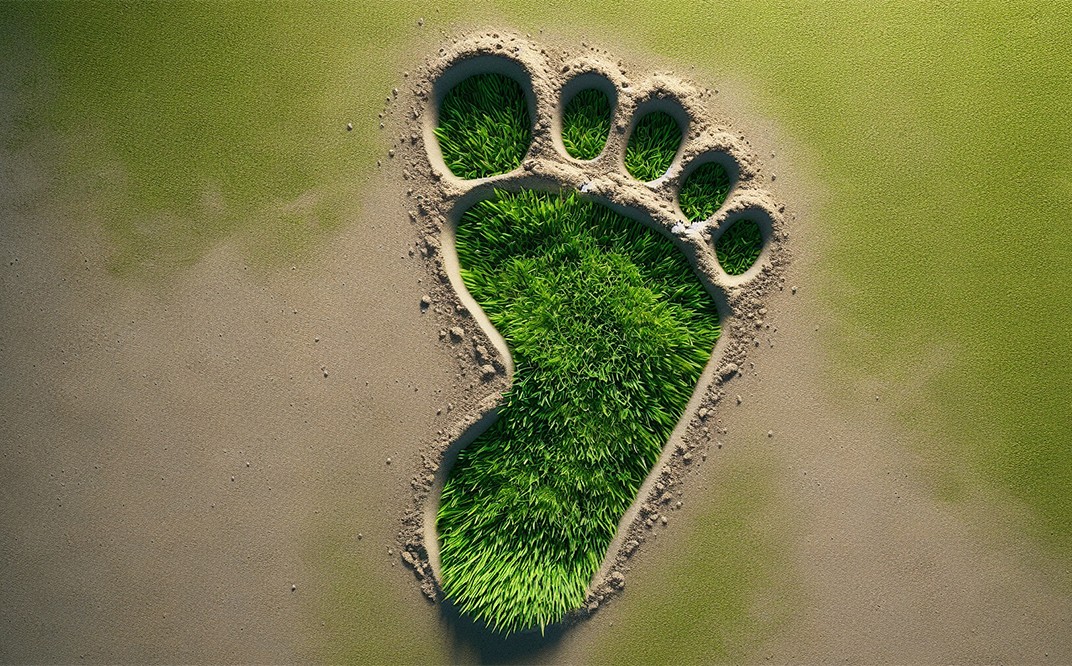
Both the unconscious consumption and pollution of freshwater resources may cause a serious freshwater crisis in the future. Damage to water ecosystems can have a chain effect, creating serious problems for terrestrial ecosystems as well. Therefore, both international organizations and governments need to transition to policies that can reduce the water footprint. In addition, large technology investments made by large companies can prevent water resource pollution and create an opportunity for correct resource usage.
Alongside all of these, companies regularly measuring their carbon footprint and water footprint and developing strategies based on measurement results, and individuals limiting resource use through lifestyle changes, can significantly contribute to reducing the global footprint. This is more than a choice; it is a necessity to save both today and tomorrow.
Effective Solutions to Reduce Corporate Carbon Footprint: QuickCarbon!
QuickCarbon is a user-friendly software that helps corporations measure and report their carbon footprints. The charts obtained as a result of calculations made in our QuickCarbon software help companies develop sustainable strategies. Thanks to our QuickCarbon software, which comes with features such as web-based access, secure data storage, instant reporting, and ease of data entry, you can manage carbon emissions much more easily.
To perform all your calculation and reporting processes in accordance with the ISO 14064-1:2018 Standard and GHG Protocol principles, you can contact us or request a demo.
Get Started Now
Get in touch with us to get to know QuickCarbon better and to see how it can add value to your processes.
Contact Us