Go Back
Environmental Treaties Throughout History
Situations such as the climate crisis, environmental pollution, and loss of biodiversity bring along major environmental problems. To prevent such problems and leave a more livable world for future generations, there are certain responsibilities that all countries must take. Since the establishment of the United Nations, various countries have come together and carried out joint efforts to combat environmental problems. The treaties signed aim to strengthen global cooperation. Let's examine together the environmental treaties made throughout history and the importance of these treaties.
The Purpose of Environmental Treaties
International environmental treaties are agreements that draw attention due to both their environmental impacts and their political and economic consequences. The purpose of these treaties is to regulate and manage the impacts of individuals and companies on the environment in order to protect it. The fact that such treaties are made between governments gives them an international character. While some agreements are made between only two governments, others can be signed with the participation of more than two governments. The signed environmental treaties generally concern issues such as environmental pollution, the climate crisis, threatened species, freshwater resources, habitats, oceans, and energy efficiency.
Representatives designated by countries participate in international treaties. Each representative signs by accepting the terms of the prepared agreements and makes their country a party to these agreements.
1. United Nations Conference on the Human Environment (Stockholm Conference 1972)
The United Nations Conference on the Human Environment, also known as the Stockholm Conference, is an international conference held in Stockholm, Sweden, in 1972. Known as the first major United Nations conference on international environmental issues, the United Nations Conference on the Human Environment is considered one of the important steps towards developing international environmental policies. In addition, the establishment of the United Nations Environment Programme (UNEP) is one of the important outcomes of the Stockholm Conference.
The United Nations Conference on the Human Environment holds the distinction of being the first conference to bring the protection of the environment to the table as a critical issue. The participating countries accepted various principles for strong management of the environment, including the Stockholm Declaration and the Action Plan for the Human Environment.
The Stockholm Declaration, consisting of 26 principles, has elevated environmental issues to the top among all other international issues. In addition, it has created an important platform for dialogue on topics such as how the economic balance between industrialized and developing countries should be established, and the connection between air and water pollution and people living in prosperity.
2. Montreal Protocol (1987)
The Montreal Protocol is a global agreement made to protect the stratospheric ozone layer by gradually reducing the production and consumption of ozone-depleting substances. The Montreal Protocol is among the rare agreements that have received universal ratification with the participation of all countries in the world. Completed in 1987 as a model of cooperation and researching the causes and effects of ozone depletion, this protocol was put forward as an international agreement that acknowledges the existence of problems related to the ozone layer.
3. Rio Declaration and Agenda 21 (1992)
Agenda 21 is known as the action plan of the Rio Declaration on Environment and Development. This action plan was created to address today's critical issues so that the world can prepare for the next century. Commissioned by governments and organizations of the United Nations system, Agenda 21 is a comprehensive plan of actions to be taken globally, nationally, and locally in all areas where humans have negative impacts on the environment.
The Rio Declaration on Environment and Development and the Statement of Principles for the Sustainable Management of Forests were adopted by 178 countries at the United Nations Conference on Environment and Development held in Rio de Janeiro in 1992.
4. Kyoto Protocol (1997)
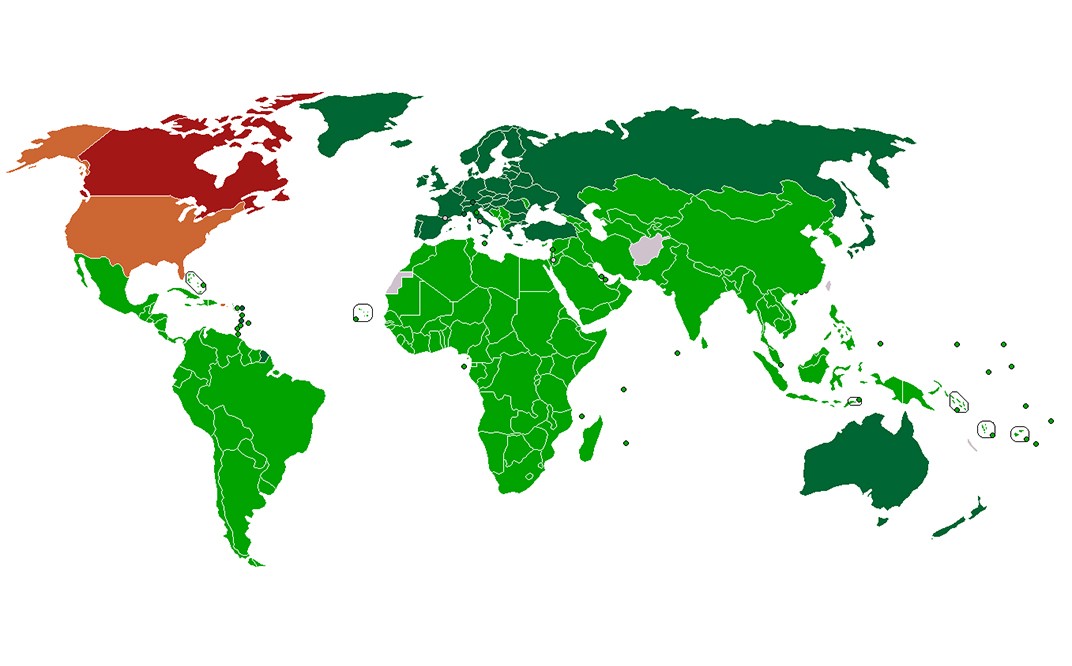
The Kyoto Protocol is an international treaty linked to the United Nations Framework Convention on Climate Change. Accepted in 1997 and entering into force in 2005, the most important feature of this protocol is that it is the only legally binding treaty regarding the reduction of greenhouse gas emissions. Another importance of the Kyoto Protocol is shown as the establishment of flexible market mechanisms based on the trading of emission permits. According to the Kyoto Protocol, the primary target of countries should be to take national measures to reduce greenhouse gas emissions.
The provisions in the Kyoto Protocol encourage greenhouse gas reduction to start in developing countries where it can be achieved at lower costs. It also provides benefits such as encouraging green investment in developing countries and involving the private sector in the process to keep greenhouse gas emissions at safe levels.
The Kyoto Protocol offers three different market-based mechanisms to make it easier for countries to achieve their targets. These mechanisms are:
International Emissions Trading: A trading system that allows countries with spare emission units to sell their excess emissions to countries that exceed their greenhouse gas emission production targets, in cases where they produce fewer greenhouse gas emissions than their allowed amount.
Clean Development Mechanism: A mechanism that allows countries that have committed to reducing their emissions to carry out an emission reduction project within the borders of developing countries.
Joint Implementation: Offering a cost-effective and flexible way for countries party to the Kyoto Protocol to fulfill their commitments, this mechanism allows parties to benefit from foreign investment and technology transfer.
5. World Summit on Sustainable Development (2002)
The principles regarding the implementation of Agenda 21 and commitments regarding the Rio principles were checked at the World Summit on Sustainable Development (WSSD) held in Johannesburg, South Africa, in 2002. In addition to over a hundred heads of state and government, tens of thousands of government representatives and non-governmental organizations attended this summit. The negotiations lasted for days and resulted in important decisions on issues such as water, energy, health, agriculture, and biodiversity. Some of the outcomes of the summit are as follows:
The need to diversify energy supply and to add renewable energy sources to the global energy supply was emphasized.
Commitments made within the scope of combating HIV and AIDS were reaffirmed.
A call was made to establish an international regime that will ensure the fair sharing of benefits arising from the utilization of genetic resources.
A decision was made to establish an international solidarity fund for the eradication of poverty.
6. United Nations Conference on Sustainable Development (Rio+20)
On the 20th anniversary of the Rio Conference held in 1992, the United Nations Conference on Sustainable Development (Rio+20) was held in Rio de Janeiro from June 20 to 22, 2012. As a result of the summit, an outcome document titled "The Future We Want" was approved to guide the development process. The conference also adopted innovative guidelines on green economy policies and initiated implementations regarding the financing of sustainable development. The countries participating in the conference adopted a 10-year framework of programs on sustainable consumption and production patterns. Forward-looking decisions were taken in specific areas including energy, food security, cities, and oceans.
7. Paris Agreement (2015)
The Paris Agreement is a legally binding international treaty on climate change. This agreement was adopted at the United Nations Climate Change Conference (COP21) held in Paris in 2015 and entered into force in 2016. The main objectives of the Paris Agreement are:
The most fundamental goal of the Paris Agreement, signed to ensure the reduction of global greenhouse gas emission levels, is to keep the global average temperature increase well below 2°C above pre-industrial levels. Another goal is to limit the temperature increase to 1.5°C above pre-industrial levels. This way, the adverse effects of climate change can be reduced.
Collective progress towards achieving the purpose of the agreement and its long-term goals will be assessed at regular intervals.
Financial support will be provided to developing countries to mitigate the effects of climate change, strengthen resilience, and build their capacity to adapt to the impacts of global warming.
QuickCarbon is by Your Side on the Path to Becoming a Sustainable Company!
All these international environmental agreements are critical for the protection of countries' natural resources, combating the climate crisis, and the continuity of environmental sustainability. In such agreements, all parties must fulfill their responsibilities regarding the targets they have set and report the steps they have taken.
If you want to make your business sustainable, QuickCarbon is with you! A user-friendly software, QuickCarbon calculates and reports the corporate carbon footprints of businesses within the scope of the ISO 14064-1:2018 Standard and the GHG Protocol. With QuickCarbon, you can reduce the carbon emissions generated by your company by determining new emission reduction strategies, and you can create internationally valid reports whenever you wish. If you would like to get detailed information about QuickCarbon, which is a user-friendly software, and request a demo, you can contact us.

Get Started Now
Get in touch with us to get to know QuickCarbon better and to see how it can add value to your processes.
Contact Us