
Go Back
What is a Sustainable Supply Chain? How is it Established?
Today, the concept of sustainability is no longer limited to environmental issues alone. Companies striving for long-term success in the business world have started to establish sustainability as their core strategy. While determining their growth targets, businesses consider environmental and social factors as well as economic indicators. So, is it possible to achieve economic growth by considering environmental and social values? Sustainable supply chains say "Yes!" to this question. Let's take a closer look at what sustainable supply chains are, how they are established, and the advantages of these chains.
Transformation in the Supply Chain: Sustainable Supply Chain
A sustainable supply chain refers to the process of integrating environmental, social, and economic standards into the stages from the procurement of raw materials to the moment the products reach the end consumer. Besides reducing the environmental impact resulting from the activities of links in the supply chain, sustainability also aims to increase social benefit and create long-term economic value. According to Carbon Disclosure Project's "Global Supply Chain Report 2022" data, greenhouse gas emissions originating from the supply chain are observed to be 11.4 times higher than the gases directly emitted by companies. However, it is possible to prevent this situation with sustainable supply chains. Furthermore, the Sustainable Development Goals declared by the UN in 2015 also play an encouraging role for companies to establish sustainable supply chains.
To create a sustainable supply chain, some of the steps that can be taken environmentally, socially, and economically can be listed as follows:
Environmental Sustainability
Environmental sustainability aims to both meet current needs and protect resources for future generations. Beside the efficient use of resources, it promotes issues such as reducing carbon emissions, waste management, and transitioning to renewable energy sources. Environmental sustainability, which supports the circular economy model as part of the fight against climate change, aims to monitor and report environmental impacts at every stage of the supply chain.
Social Sustainability

Social sustainability prioritizes the protection of employee rights, increasing the welfare of communities, and enhancing the positive social impacts of business processes. It promotes progress in areas such as fair working conditions, fair competition, supporting local groups, and acting ethically in business practices. Organizing vocational training programs to support the well-being and development of employees, and managing payroll policy at reasonable rates, are also among the social sustainability goals.
Economic Sustainability
The Directorate of Innovation and Economic Transformation report, published by UNIDO SDG in August 2023, stated that 450 million people work in global supply chains. The principle of economic sustainability, which aims to make improvements in a wide range of areas from the conditions of employees to the future perspectives of companies, encourages increasing productivity while lowering costs in supply chain processes. Economic sustainability supports businesses in creating sustainability strategies in areas such as developing innovative business models, diversifying suppliers, long-term value creation, and risk management.
Why is a Sustainable Supply Chain Important?
Making supply chains sustainable is one of the important steps for both increasing efficiency and optimizing costs. While helping to reduce environmental impacts, a sustainable supply chain can contribute to the continuous improvement of supply chains. Establishing new company partnerships and creating mutually beneficial business opportunities is possible through sustainable supply chains.
A significant portion of industrial carbon emissions are emissions characterized as "Scope 3." This refers to the energy needed to produce goods or transport them over long distances. A study conducted by the Carbon Trust revealed that carbon emissions from the supply chain account for 65% to 95% of a company's total emissions. Moreover, tracking these emissions is extremely difficult. Therefore, reducing emissions by making supply chains sustainable is of great importance both for achieving carbon-neutral goals and for improving the future of the world.
Differences Between Traditional Supply Chain and Sustainable Supply Chain
The primary differences between a traditional supply chain and a sustainable supply chain can be listed as follows:
While the traditional supply chain focuses on speed and profit optimization, the sustainable supply chain also considers environmental and social impacts. Environmental protection and ethical values are prioritized.
The traditional supply chain usually relies on fossil fuel use, limited natural resources, and cheap labor. In a sustainable supply chain, on the other hand, the use of recyclable materials and renewable energy sources, as well as ethical business practices, are involved.
The carbon emissions of the traditional supply chain are extremely high, and waste management is insufficient. In a sustainable supply chain, increasing energy efficiency and reducing carbon emissions are prioritized. Additionally, improving waste management is targeted.
How to Build a Sustainable Supply Chain?
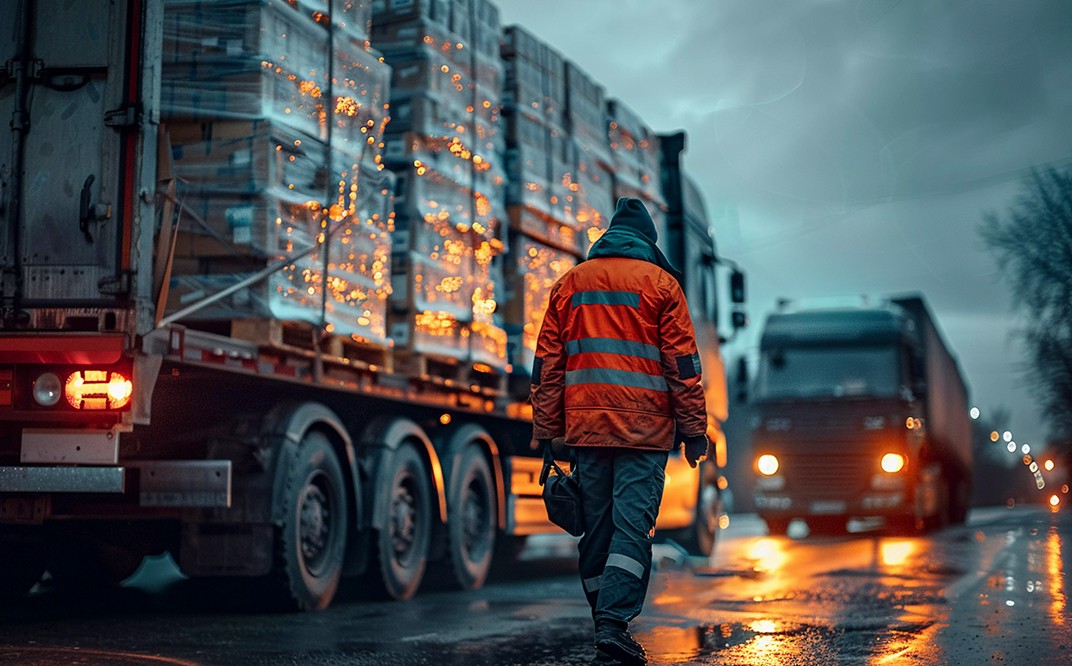
Clear targets are set to build a sustainable supply chain that aims to create social and economic value while fulfilling environmental responsibilities. Businesses start by identifying their goals in areas such as reducing their carbon footprint, protecting and improving employee rights, or energy efficiency. By determining the timeline to achieve these goals, the process of establishing a sustainable supply chain begins. The steps followed during the process are generally as follows:
Suppliers are identified in accordance with sustainability goals. Existing suppliers are analyzed, and each is encouraged to integrate into sustainability. Transparent relationships developed with suppliers ensure that stakeholders are kept informed about the process.
Resources are used effectively. This phase, which is evaluated in a very wide spectrum from using recyclable materials to transitioning to renewable energy sources in production, offers both environmental and financial benefits.
The replenishment and recycling of products that have completed their lifespan are carried out through reverse logistics from the point of consumption.
Innovative technologies are integrated into the process. While automation technologies are used in production, various softwares can be utilized to monitor, calculate, and report the carbon footprint. Integrating technology into the supply chain allows every stage of the process to be tracked transparently.
Practices such as transport, storage, and packaging are carried out with minimal negative environmental impact.
Sustainable supply chains have numerous stakeholders. The cooperation of these stakeholders, consisting of manufacturers, suppliers, customers, and consumers, supports the correct execution of the process. Organizing trainings to raise employee awareness, encouraging customers to exhibit conscious consumption, and involving the works of non-governmental organizations and local groups in the process contribute to creating a common ground of collaboration.
Sustainable supply chains function in accordance with the circular economy model. Processes such as designing products to have a long lifespan and establishing recycling systems help extend the lifecycle of materials. The circular economy model ensures that resources are utilized with maximum efficiency.
Performance monitoring and reporting are critical regarding the functioning of the process. Transparent reporting of identified key performance indicators (KPIs) serves to share sustainability activities with all stakeholders.
What are the Advantages of a Sustainable Supply Chain?
A sustainable supply chain has significant environmental, social, and economic advantages. Prominent among these advantages are:
Reduction of Environmental Impact
Sustainable supply chains contribute to preserving ecological balance by reducing the environmental impacts of businesses. Integrating practices such as waste management into the sustainable supply chain can help prevent pollution.
Effective Cost Management
Like all sustainable processes, supply chains also increase efficiency. Practices such as the proper use of raw materials and recycling can help reduce costs. Encouraging the use of fewer components in the production stage of the sustainable supply chain can support the supply of recyclable materials. Product designs offering long-lasting usage can reduce both waste volume and production costs.
Enhancing Brand Reputation
In the study titled "The Impact of Ethical Supply Chain Practices on Brand Equity" published by Samuel Holloway in June 2024, it was stated that brand transparency is accepted by users as an "indicator of reliability and ethical commitment." Another study has revealed that companies with higher ESG scores have a stronger brand reputation.
Minimizing Risks
Crises with global impacts, such as the COVID-19 pandemic, directly affect supply chains. The inclusion of non-compliant suppliers within supply chains that have numerous stakeholders can disrupt the flow of goods and services. Sustainable supply chains minimize potential risks by promoting transparency and auditing. Particularly, utilizing innovative technologies or custom software and tracking the entire supply chain process from a single screen enables all stakeholders to receive real-time information about the processes.
Long-Term Success
Sustainable supply chains secure the growth and success of businesses. Providing resilience against supply chain crises, the process offers flexibility to companies in adapting to global trends. Companies that comply with sustainability-oriented policies and regulations can be expected to experience a stable growth process.
Sustainable Supply Chain: The Way to Success
There are a series of standards and certificates to be followed for a sustainable supply chain to achieve success. Standards prepared by ISO guide businesses in establishing sustainable supply chains. Certificates give consumers confidence by demonstrating that companies fulfill their sustainability commitments.
Incorporating innovative technological advancements into supply chains is among the rising trends. Integrating artificial intelligence into the process offers serious contributions to increasing the transparency of supply chains and monitoring every stage. This digitalization makes supply chains fast, efficient, and eco-friendly.
As QuickCarbon, we offer solutions for reducing carbon emissions, which is one of the important stages of the sustainable supply chain. We enable transparent tracking of processes with our user-friendly software that calculates and reports according to the ISO 14064-1:2018 Standard and the GHG Protocol. You can contact us to request a demo.
Get Started Now
Get in touch with us to get to know QuickCarbon better and to see how it can add value to your processes.
Contact Us